What Is A Building Energy Rating ( BER)?
A Building Energy Rating (BER) measures the energy efficiency of a property. It tells you how much energy a home is likely to use for heating, hot water, ventilation and lighting under standard conditions. A BER also provides an indication of the property’s carbon emissions and estimated energy performance.
The BER system makes it easy for homeowners, buyers and tenants to compare the energy efficiency of different properties before buying or renting.
BER certificates are administered by the Sustainable Energy Authority of Ireland (SEAI) and must be carried out by a registered BER assessor.
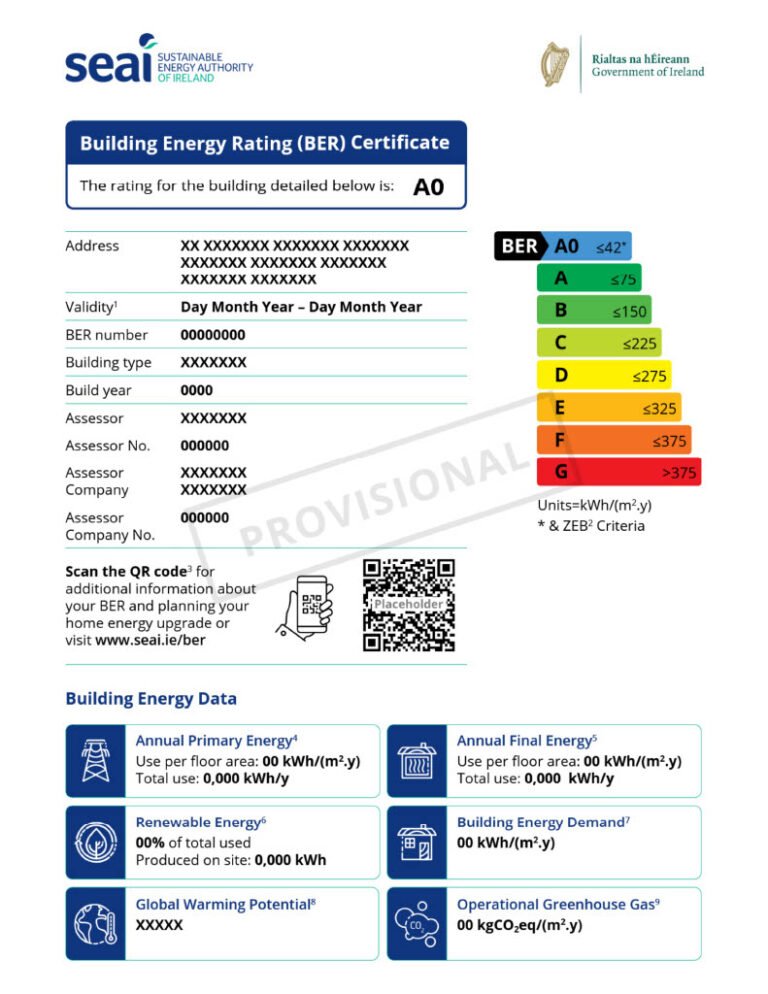
The BER Scale (2026)
Ireland now uses a simplified BER scale ranging from A0 to G.
- A0 – The highest rating, awarded to exceptionally energy-efficient homes that do not use fossil fuels.
- A – Excellent energy performance with very low running costs.
- B – Good energy efficiency with lower energy consumption.
- C – Average energy performance.
- D – Below average efficiency, with opportunities for improvement.
- E – Higher energy demand and running costs.
- F – Poor energy efficiency.
- G – The least energy-efficient homes with the highest energy requirements.
The simplified scale was introduced in May 2026 to align Ireland’s BER system with European energy performance standards, making ratings easier to understand and compare across the EU. Existing BER certificates remain valid for up to 10 years unless major renovation work changes the property’s energy performance.
Is a BER Certificate Legally Required in Ireland?
Yes. In most cases, a valid BER certificate is legally required when:
- Selling a property
- Renting a property
- Advertising a property for sale or rent
Failure to provide a BER certificate can result in penalties or delays during property transactions.
Who Needs a BER Certificate?
A BER certificate is required by:
- Homeowners selling their property
- Landlords renting residential or commercial buildings
- Estate agents advertising properties
- Property developers and investors
Some exemptions apply, but most occupied buildings require a valid BER.
How Long Does a BER Certificate Last?
A BER certificate is valid for 10 years, unless significant energy upgrades are made to the property, such as:
- New insulation
- Heating system upgrades
- Renewable energy installations
After major improvements, a new BER assessment may better reflect the property’s efficiency.
How Is a BER Assessment Carried Out?
A common question asked after What Is A BER Cert? is how is a BER Assessment carried out? A BER assessment entails carrying out an on-site survey by an SEAI-registered BER assessor and completing the reports based off the survey. The assessor will examine:
- Insulation levels
- Windows and doors
- Heating and hot water systems
- Ventilation
- Lighting
- Building layout and construction
The collected data is entered into SEAI-approved software to generate the BER rating and advisory report which is then sent out to the homeowner for their records.
How Much Does a BER Certificate Cost?
The cost of a BER certificate depends on factors such as:
- Property size
- Property type (house, apartment, commercial)
- Complexity of the building
Request a Booking
Can I Improve My BER Rating?
Yes. Common ways to improve a BER rating include:
- Upgrading insulation
- Improving heating efficiency
- Installing heating controls
- Adding renewable energy systems
Improving your BER can lower energy bills, increase comfort, and increase property value.

BER Certificates and SEAI Grants
A BER certificate is often required when applying for SEAI home energy grants. It helps assess eligibility and measure improvements after works are completed.
Book a BER Assessment
If you need a BER certificate for selling, renting, or upgrading your property, BERconnect.ie provides professional BER assessments across Carlow, Kilkenny, Wexford, Waterford and Wicklow.